
Table of Contents
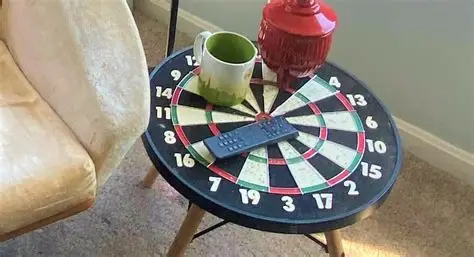
What’s your first reaction when you hold this old dart board that was just taken off the wall in your hand?
Most likely, it would be thrown directly into the trash can, or left to gather dust in a corner of the warehouse because it was too heavy. What most people see is a piece of waste riddled with holes, full of needle marks, and even with frayed edges.
But what I see are millions of sisal fibers compressed under high pressure, a high-end material with a retro industrial feel and full of stories.
This is actually an open secret in our industry: the Kenyan sisal used to manufacture a professional-grade dart board has a toughness and self-healing ability far exceeding that of most solid woods. Treating it merely as “waste” is a huge waste of this organic material.
Beyond the Target: The True Potential of an Old Dartboard
Before you start, get rid of the stereotype that “it’s just a target.” When you pull off those rusty wire meshes (spider), the bare disk covered in the marks of time is the real protagonist of our upcycle dart board project.
This is not just about saving money, but also a tribute to the violent aesthetics of “making the most of everything.”
Peeling back the layers: The “rebirth” of sisal and the deconstruction of violence
Many people make a very basic mistake when trying to repurpose an old dartboard: they try to cut it with a regular utility knife.
I once tried to cut a 1.5-inch-thick old Winmau target disc with a handsaw, but the saw blade got stuck before it was even halfway down, and I even smelled the burning glue from the friction.
You have to understand, a professional dart board isn’t wood; it’s a “monster” made of thousands of bundles of hemp fibers forcibly compressed together by a high-tonnage hydraulic press. This density means it’s extremely durable, but it also means that modifying it requires some “heavy weapons.”
The First Step: Dismantling the “Skeleton”
The deconstruction process begins with removing the metal components:
- Using a pair of needle-nose pliers, locate the number ring clips on the edge of the target disc. This requires a bit of finesse; you’ll feel the stiff rebound when the metal strikes.
- After removing the number rings, the toughest part is the embedded metal spider. If it’s an old-fashioned wire target, you’ll have to pry it off bit by bit with a pin puller. If it’s a modern blade target, these are usually embedded quite deeply.
When you finally remove all the metal parts, you’ll find a pure sisal disc with a surface full of “scars.” The numerous pinholes don’t make it look worn; instead, under side lighting, they create a texture similar to cork but rougher. This is the core of the “vintage industrial” style we’ve been searching for.
But here’s a detail most people overlook: don’t try to wash it with water. Sisal is extremely absorbent; once it gets damp, it will mold and swell, and all your efforts will be in vain.
The expert’s approach to cleaning is
- Dry brush it with a stiff-bristled brush.
- Alternatively, vacuum it on its highest setting to remove the dust hidden in the fiber gaps.
Option A: From Shooting Range to Wine Cabinet—A High-End Alternative to Cork Cushions
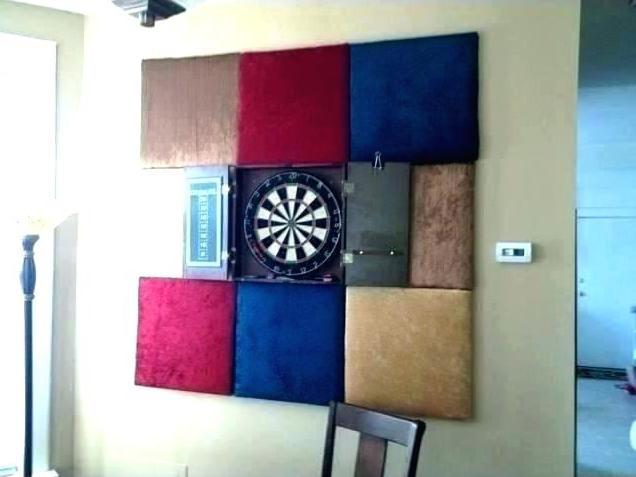
If your dart board is only badly damaged in the center (the heart and the triplet area), but the edges are still relatively intact, then congratulations, you have an excellent dart board art project resource.
You can turn it into a highly personalized “heat insulation mat” or “bar tray.”
Crafting Your Sisal Coaster/Tray
This isn’t just a simple flat placement. We need a little woodworking skill:
- Find a piece of old, dark walnut wood.
- Carve out a circular groove to fit the diameter of the target plate, about half its thickness.
- Insert the cleaned, bare target plate into the groove.
Why do this?
A pure sisal coaster serves as a tray with exceptional friction. When you place an ice-cold whiskey with condensation droplets on it, the sisal fibers instantly absorb the moisture from the bottom of the glass, protecting your solid wood tabletop.
This physical moisture-absorbing property is unmatched by any silicone coaster.
Moreover, when your friends come over and point to this thing embedded in the table, asking about it, you can casually say, “Oh, this is the fifth dart board I’ve ruined.” This kind of subtle show-off moment is the essence of modification.
An industry insider revealed: In fact, many themed bars that claim to have a “retro style” actually have decorative target plates on the walls that are not “antiques collected by the owner” at all. Instead, they are old target plates that we have recycled at low prices. After simple polishing and sealing with varnish, they are transformed into “art installations” at ten times the price.
Option B: A Feature-Rich Wall—More Than Just Hanging Photos
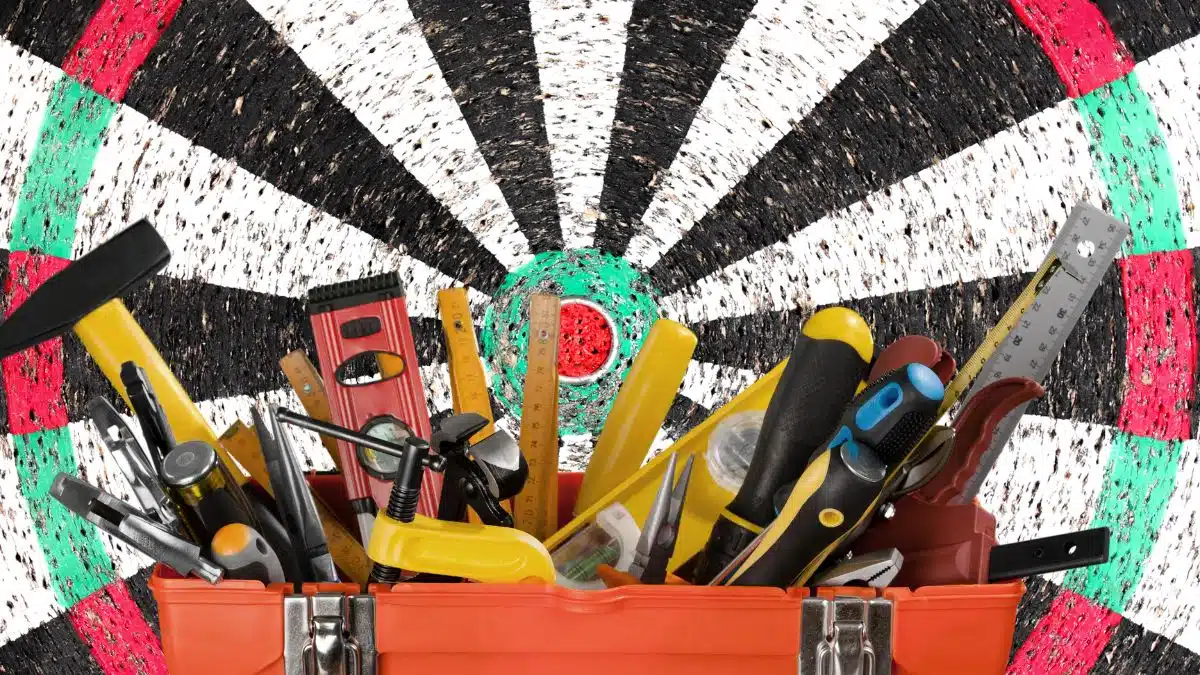
If you’re a tool enthusiast, or your garage workbench is missing a display board, the upcycled dart board is the most hardcore option.
Ordinary corkboards are too soft, and heavy tools will fall off. Pegboards are too expensive and require special hooks. An old target tray is simply the perfect tool storage wall.
Remember the density I mentioned earlier? You can hang wrenches, screwdrivers, or even light drills directly on it with long nails.
Sisal has extremely strong nail-holding power; the hole will even partially close automatically after being pulled out.
Simple Modification Steps for a Tool Wall
The modification steps are actually very simple:
Cutting (optional): If you find a round shape too bulky, you can use a jigsaw with a metal cutting saw blade to cut the target plate into hexagons or squares. Remember to wear a mask; the flying lint will make your nose itchy all day.
Edge sealing: The cut surface will spread out, so it must be sealed with strong wood glue or hemp rope, otherwise it will slowly crumble like a compressed biscuit.
Coloring (optional): If the original black, white, red, and green color scheme is too jarring, you can spray a thin layer of matte black spray paint. Sisal absorbs paint very well, creating a texture similar to carbonized wood.
During this process, you may need some special fasteners to hang the heavy target plate on the wall.
This transformation gives old items a completely new life. They are no longer targets for attack, but rather become a solid shield protecting your beloved tools.
FAQ (Frequently Asked Questions)
Q1: Are there any special techniques for cutting dartboard?
A: This is truly physically demanding. Never use a regular utility knife; you’ll cut yourself.
I recommend using:
- A jigsaw or band saw with a fine-toothed blade. The key is to go slowly and apply steady pressure. Sisal fibers are very tough and heat up easily; if the saw blade overheats, the glue will melt and stick to the teeth.
- If you’re cutting by hand, a sharp Japanese hand saw (pull saw) is the best choice, but be prepared for a lot of dust.
Q2: Will the modified dart board have an odor?
A: Yes, there will be some. Old sieve trays usually have a mixed smell of dust, metallic oxidation, and possibly even tobacco and alcohol. The most crucial odor is the sour smell of sisal itself after it gets damp.
Never wash them.
The best way to remove the odor is:
- Expose them to sunlight for 2-3 days (UV sterilization).
- Then sprinkle with baking soda and let them sit overnight.
- The next day, vacuum them clean with a powerful vacuum cleaner.
- If possible, spray some fabric deodorizer, but keeping them dry is key to removing the odor.
Q3: Is this kind of Dartboard art project suitable for beginners?
A: The suitability depends on the complexity of the project:
- If you’re just doing surface decoration (like removing the mesh to create a photo wall), it’s perfect for beginners—zero cost and great results.
- But if you’re involved in cutting, piecing together, or making furniture (like a coffee table top), it’s intermediate DIY difficulty. You’ll need to know how to handle high-density fiber materials and have suitable power tools.
The core challenge of repurposed old dartboard lies in managing its impressive weight and the tendency for the edges to fray.
Q4: What can I do if the holes on the old target plate cannot be repaired?
A: No need to repair it! That’s the charm of upcycles. Those densely packed holes are a testament to time.
If you’re really bothered by the severe decay in the center, you can:
- Remove the rotten core (usually the red center).
- Insert a new set of wine corks.
- Or embed a round vintage clock movement to turn the flaw into a visual focal point.
Conclusion
We live in a fast-paced consumer era where items are “use and discard,” and their lifespan often ends the moment they lose their original function. But for a high-quality dart board, when it can no longer withstand the impact of darts, its physical purpose may be over, but its aesthetic value is just beginning.
From an arena on the wall to an artwork on a table, this transformation requires not only hands-on skills, but also an eye that can see the soul of old objects.
The next time you’re about to throw that bruised plate out the door, stop and touch the rough, prickly surface of the sisal. You might find that, from a different perspective, it can still stubbornly remain “nailed” to your life.
After all, something that can withstand millions of punctures without falling apart deserves a place in this home, even if it is no longer a dartboard.