Stop spraying water on your Dart Board! Debunking the “moisturizing lie” that 90% of players believe.

Table of Contents
Holding a spray bottle, I was about to give the slightly tired dartboard hanging on the wall a “moistening baptism.”
Stop. Immediately, right now, put the spray bottle down.
I know what you’re thinking. You’ve heard that old-fashioned “secret recipe” in those old-school bars: Sisal is a plant, and plants dry out when they’re dehydrated. Spraying it with water makes the fibers swell and repair those unsightly pinholes, right?
This sounds intuitive, even ritualistic, like taking care of your equipment. But as an observer who’s been in the industry for a decade, I have to tell you a counterintuitive and brutal truth: this so-called “maintenance” is actually sentencing your dartboard to death.
If you don’t want your betting table to bulge like a steamed bun a week later, or to leave a layer of rust when you pull out your darts, then the following content might save your wallet and your throwing touch.
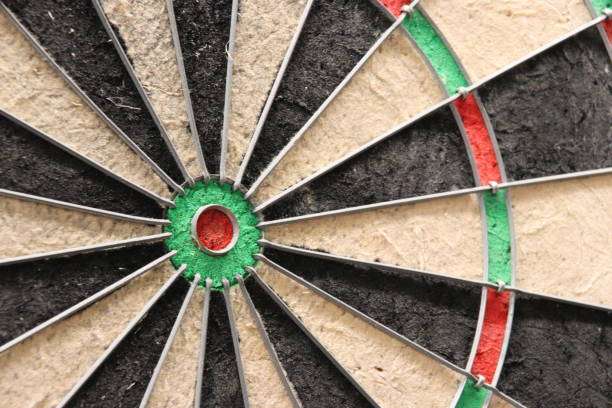
The origin of the myth: Why do we always want to “water” it?
Before delving into the disaster site, we must first understand why the misting dart board myth is so deeply ingrained.
Decades ago, when dartboards were made of elm or cork, the boards did need to be kept at a certain level of humidity to prevent cracking. It’s common knowledge that wood cracks when it dries out.
However, modern professional dartboards are almost exclusively made of sisal.
Sisal is not wood. It is an extremely strong fiber from the agave plant.
Applying ancient logic for wood to modern sisal teapots is like trying to refuel an electric car—it’s not only useless, it’ll also ruin the engine.
Many novice teapot enthusiasts, upon seeing pinholes on the surface, immediately assume “it’s dried out” and start searching for “how to fix dried-out dart board,” only to fall into the trap of spraying water to keep it moist.

The “invisible damage” caused by moisture entering the plate.
at what happens when water droplets come into contact with the surface of the dart board, using a microscope.
1. Deadly swelling and “bulging”
Sisal fibers do indeed have extremely high moisture absorption. When you spray water, the fibers quickly absorb the moisture and swell. Sounds amazing, right? Is this the principle behind using expansion to fill pinholes?
Incorrect.
Modern dartboard manufacturing involves forcibly compressing and bonding thousands of bundles of sisal fibers to a backing board under high pressure. This internal pressure has reached a critical equilibrium.
When you introduce extra moisture, the fibers absorb it and swell, increasing in volume dramatically. However, since it’s a closed system, the fibers have nowhere to go but to push outwards.
The result is that the surface of the dartboard is no longer flat but rather develops irregular bulges, commonly known as “bumps.” Once this happens, there’s no way to make it shrink back down. Your dartboard is completely ruined.
2. The Nightmare of the Metal Skeleton
Don’t forget, your dart board isn’t just made of grass; it also contains metal. Whether it’s blade wire or round wire, they are all made of metal.
Once moisture penetrates deep into the sisal, it is difficult for it to evaporate. The moisture is trapped within the fiber clusters, clinging tightly to the metal frame.
This leads to severe water damage on the sisal dart board—rusting. You may not see the internal changes for the time being, until one day you pull out the dart and find brown rust on the tip, or worse, the metal mesh begins to loosen, deform, or even break.
3. A breeding ground for mold
If you think rust isn’t bad enough, imagine your dartboard becoming a mold incubator hanging on the wall.
Sisal is a natural organic compound; water plus organic matter, coupled with poor ventilation due to tight compression, creates the perfect environment for mold to thrive.
Those dark spots that you think are “traces of time” may very well be the beginning of mold growth.
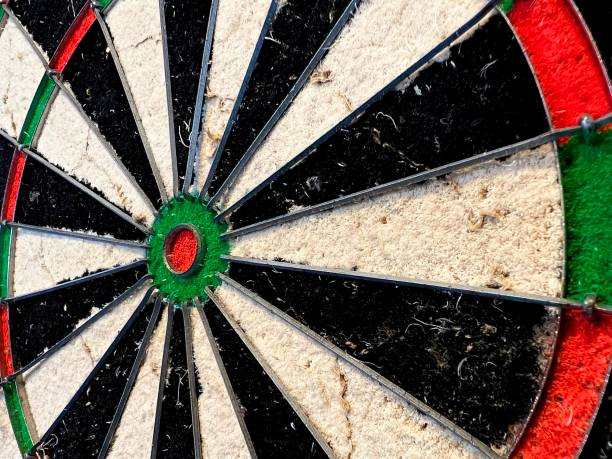
The so-called “dryness” may just be your illusion.
Many players are obsessed with how to fix a dried-out dart board because they feel the board has become harder or the bounce-out rate has increased.
But this is usually not due to “water shortage,” but rather to “overuse” and “lack of maintenance.”
When an area (such as the triple zone in a 20-point game) is repeatedly riddled with holes, the fibers will break and fall off, resulting in decreased grip.
At this point, spraying water will only soak and disintegrate the broken fibers and will not have any repairing effect.
The real logic of “repairing” should not be about adding water but about managing its losses more intelligently.
The correct “life-extending” solution: drying and rotation
If you really want to extend the lifespan of your Dart board, do the following immediately:
Keep absolutely dry
This point cannot be overstated. Your dartboard thrives best in, or even slightly, dry conditions. Do not hang it near the bathroom or in high-humidity semi-outdoor locations.If your room is very humid, you should even consider using a dehumidifier instead of a humidifier. Preventing water damage on sisal dart board is far more important than trying to fix it afterward.
Regular rotation
This is the only real secret to dartboard skincare.Most dartboards have a detachable and rotating number ring. Don’t just focus on the red 20 points.Frequency: If you play every day, it is recommended to spin once a week.Method: Remove the number ring, rotate the disk by one sector (for example, move the original 8 partition to the top to become a new 20 partition), and then put the number ring back on, ensuring that “20” is always at the top.This allows the fibers to be stressed evenly throughout the entire structure. When the original 20 sections are resting, the remarkable “self-healing” ability of sisal fibers (actually, fiber resilience) comes into play.
Use the correct dart tip.
Check your dart points. If the points have barbs or have become hooked, they will pull out the sisal fibers like hooks when pulled out. Keeping the points rounded and smooth with a whetstone is the gentlest way to care for your dart board.
We live in an era of technological overload, where we often feel the need for complex interventions to keep things running. But in the world of Dartboard , restraint is the virtue.
Even if you hear some “veteran” expert confidently recommend spraying water, please trust the basic principles of modern materials science. High-quality sisal doesn’t need your “moisturizing spray”; it needs your regular rotation and gentle drying care.
Next time you feel the chart is in a bad state, don’t fill it with water, spin it. That’s the dividing line between professional players and amateurs.
FAQ
1. Can I use a steam iron to repair holes in a dart board?
Absolutely not.
Steam is far more damaging than spray; the high temperature and humidity will penetrate deep into the sisal fibers instantly, causing rapid expansion and severe water damage to the sisal dart board. This will directly lead to irreversible bulging and deformation of the board surface.
2. How long can a high-quality Dart board typically last?
In a home environment and with regular (weekly) rotation, a high-quality sisal dish can last 1 to 2 years or even longer. If you never rotate it, the core area may fail within 3 to 6 months. This has nothing to do with whether you spray water on it; it’s purely due to physical wear and tear.
3. Since water cannot be sprayed, how exactly do you fix the dried-out dart board?
If the sisal board surface has truly hardened and crumbled due to extreme aging, it is practically impossible to “repair.” This indicates that the sisal fibers have broken and become ineffective.The most economical and sensible choice at this point is to replace it with a new board, rather than trying to revive it using methods from the misting dart board myth.