
Some changes don’t happen suddenly.
They’re more like a slowly rising curve, almost imperceptible until a certain point, until one day, the feel for the game becomes unfamiliar, the accuracy starts to fluctuate, and the data in the training log stops improving. At this point, many long-term players will subconsciously attribute the cause to their form, focus, or “not practicing hard enough lately.” But at a deeper level, the problem is often not just about “people.”
Amidst numerous discussions and training logs from real players, a frequently mentioned yet often overlooked variable has gradually emerged—the dart board itself.
As skill levels advance to intermediate and advanced stages, the device ceases to be merely a backdrop for actions but begins to actively influence feedback, rhythm, and judgment. This is why many advanced players, at a certain stage, re-examine their familiar target surfaces.
Skill stagnation is not a psychological problem but rather a result of feedback becoming dishonest.
Almost every long-term player will experience a distinct dart board performance plateau.
The throwing motion remains consistent, the training frequency does not decrease, and even more systematic training methods are introduced, but the results oscillate repeatedly within a narrow range.
On the surface, this appears to be a “growth bottleneck”; from a training perspective, it’s more like the feedback system starting to distort.
In the early stages, even if there are slight errors in the target surface, inconsistent rebounds, or blurred edges in the zones, players can still cover up these problems with significant skill improvements. However, when throwing accuracy reaches the millimeter level, any noise from the dart board will be amplified into interference.
Some players mentioned similar experiences on the forums:
- The same movement was consistently accurate in the first half of training, but in the second half, it started to deviate inexplicably.
- Even though the same area was hit, it produced completely different sensations and sounds.
- After a series of successful hits, the next dart is more likely to bounce out abnormally or deflect.
These phenomena are not always caused by hand fatigue, but rather by the fact that the target surface’s “response mode” becomes inconsistent after prolonged use.
When feedback becomes unreliable, the brain cannot calibrate the movements, and skills naturally stagnate.

The real impact of target surface wear is not simply that it is “old.”
Many players underestimate the complexity of target wear.
Visually, the dart board may simply appear to have a denser surface, slightly faded numeral rings, and minor marks in the center. However, at the material level, the changes are far more profound than imagined.
After prolonged high-frequency use, the target surface will exhibit the following subtle changes:
- The fiber rebound speed is inconsistent, and the depth of “dart absorption” varies significantly in different areas.
- The structural density of the high-frequency hit region changes, leading to instability in the feedback within the same region.
- The metal separator structure experiences minute displacements, imperceptible to the naked eye but sufficient to affect high-precision throwing.
These changes, when combined, create the illusion that
The actions appear repetitive, but the results cannot be replicated.
At the advanced stage, this uncertainty is extremely destructive.
This is because the core of advanced training is not “more pitches,” but “repeatability.” When the dart board cannot provide consistent feedback, training gradually becomes a drain rather than a source of growth.

When equipment and skill level are no longer compatible, the problem can subtly reshape your movements.
An often overlooked fact is that
Players do not simply “use” the device in a one-way manner but are instead shaped by the device through long-term interaction.
In discussions about advanced dart board issues, many players later realized that they had inadvertently adjusted their movement details in order to adapt to certain flaws in the target surface.
- To avoid abnormal rebound in certain areas, the angle of incidence was deliberately changed.
- The follow-up swing ended prematurely due to delayed sound feedback.
- In order to “secure the result,” the originally more efficient shooting rhythm was sacrificed.
In the short term, these adjustments may seem effective;
In the long term, however, they will solidify into unnecessary technological compromises.
When players realize these problems, they are often already in a strange position:
It’s not that they don’t know how to throw, but that “no matter how they throw, it’s not completely correct.”
Re-examining the Dart board doesn’t mean negating past training, but rather acknowledging a reality—
The current level requires a more honest feedback system.
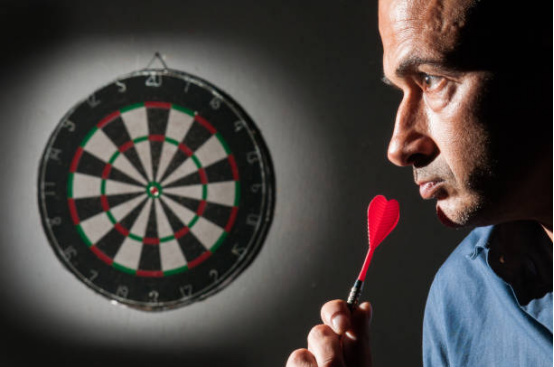
Data, community, and real-world experience are all pointing to the same conclusion.
quality.”In recent years, a trend has become increasingly apparent in player communities, training analysis blogs, and discussions on tournament preparation:
Intermediate and advanced players are beginning to shift their focus from “practice quantity” to “practice environment quality”.
dart boardThe Dart board is mentioned repeatedly, and the reason is not complicated:
- Even minor fluctuations in throwing data can often be traced back to issues with target consistency.
- In high-level combat training, differences in target feedback are rapidly amplified.
- The condition of the target surface after long-term use directly affects the accuracy of technical evaluation.
Some training analysis articles even point out that if the training equipment itself introduces uncontrollable variables, then any conclusions about technical adjustments may be misjudgments.
This is why more and more players, after reaching a stable stage, will begin to systematically check their training environment, rather than simply increasing the intensity of their practice.
.More Dart Board-related content .
FAQ: Some of the most frequently asked questions by advanced players
Q1: How do I determine whether the problem is technical stagnation or the Dart board holding me back?
If the movements are stable and the training frequency is normal, but the hit distribution starts to become randomized, and the performance improves after changing the environment, it often indicates a problem with the feedback system.
Q2: Will target surface wear always affect advanced players?
The impact is limited in the early stages, but as accuracy requirements increase, the inconsistencies caused by wear will be significantly amplified.
properties; Q3: Will all dartboards develop feedback distortion after long-term use?
From a materials science perspective, long-term high-frequency impacts will inevitably change structural properties, only the degree and speed will differ.
Q4: Does re-evaluating the equipment mean overturning the existing training system?
No. More often than not, it’s a “calibration,” not a reconstruction.
past butRe-examining is not about negating the past, but about clearing away the noise for the next stage.
.The real transformation often happens in seemingly insignificant places.
When longtime players begin to re-examine their dart boards, they are not actually looking for shortcuts to faster progress but rather trying to restore a neglected premise—that feedback must be genuine.
Only when the target surface no longer generates noise can the action be accurately represented.
Only when the environment no longer interferes with judgment can technology continue to advance.
Perhaps the next breakthrough won’t be in your wrists, breathing, or mental adjustment.
Rather, it will be in that entire target surface you face every day, which you’ve long taken for granted.