Successful cases of using Dart Board as a rehabilitation training tool

The scene commonly seen in rehabilitation rooms is often repetitive, slow, and somewhat monotonous movements.
Raise an arm. Lower it. Do it again.
For many patients with physical injuries, the real difficulty is not the movement itself but the will to persevere.
It is against this backdrop that dart boards have gradually appeared in some rehabilitation training scenarios. While not a traditional medical device, it has unexpectedly solved one of the most challenging problems in rehabilitation training—getting patients willing to participate and sustain their involvement.
This article will explore, through several real-life cases, how dart boards can help injured individuals regain motor skills, increase muscle strength, and gradually improve reaction speed during the rehabilitation process. These cases do not emphasize “miracles,” but rather present a more realistic path to change.
From passive training to active participation: a shift in the logic of rehabilitation.
In traditional rehabilitation models, patients are often in a passive state.
Movements are specified by the therapist, the pace is determined by a schedule, and feedback mostly comes from external assessments.
In the actual application of dart rehabilitation therapy, the logic is exactly the opposite.
Patients need to judge the distance, angle, and timing of their throw themselves.
Every throw is an active decision.
This sense of “participation” is one of the key reasons why dartboards were introduced into rehabilitation training.
Case 1: Recovery of strength and control after upper limb injury
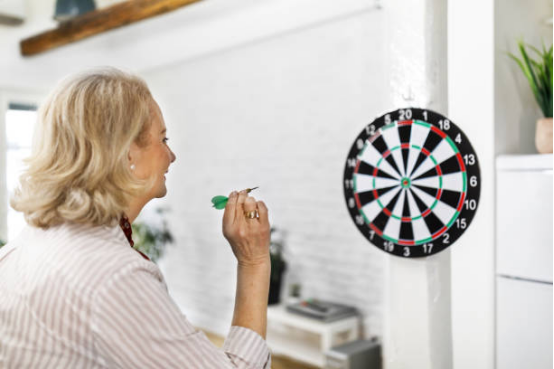
A middle-aged patient who was in the rehabilitation phase after shoulder surgery was introduced to dart board exercises in addition to regular stretching and light weight-bearing training.
The initial setup was very simple:
- shorten throwing distance
- Limit the number of throws
- Not emphasizing hit rate
The key is not in “accuracy,” but in “movement.”
A few weeks later, the rehabilitation team noticed a change:
The patient began to naturally control the stability of his shoulder joint and actively adjust the force exerted by his wrist during the throwing motion.
Compared to repetitive, single movements, the movements in dart board recovery scenarios are closer to how the arms are used in real life. This functional training ensures that muscle strength recovery is no longer an isolated process.
How can a dartboard simultaneously stimulate muscle and nerve responses?
Rehabilitation training is not only about muscle strength but also about the re-coordination of the nervous system.
Dartboard demonstrates a clear advantage in this regard.
Completeness of action chain
A throwing motion, seemingly simple, actually involves:
- Visual positioning
- nerve signal transmission
- Coordinated movement of shoulder, elbow, and wrist
In dart exercise therapy, this complete chain of movements is repeatedly activated, which helps to reconstruct neural pathways.
Case 2: Reaction Speed Training After Mild Nerve Injury
A patient who had experienced a mild stroke was introduced to a dart board as an auxiliary training tool during the recovery period.
Unlike traditional reaction training, Dartboard does not emphasize speed itself, but rather “when to act.”
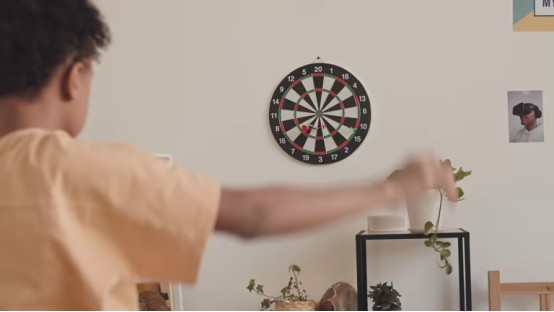
In the early stages, patients’ responses were noticeably slow.
However, as training progressed, the hesitation time gradually decreased.
The therapist’s observation records show that
The patient’s reaction speed in daily life also improved, such as catching objects, turning around, and dealing with emergencies.
These kinds of changes are difficult to measure entirely with a single data point, but they have significant implications in real life.
Emotion and motivation are often overlooked variables in rehabilitation.
Recovery failure is often not due to physical problems, but rather to psychological fatigue.
The introduction of a dartboard often brings about an emotional shift.
Gaming-like experience, reducing training pressure
Compared to equipment-based training, dart board is more like a recreational activity.
This “de-medicalized” experience allows patients to relax more.
Common descriptions found in user feedback from multiple rehabilitation centers include
- Time seems to fly by.
- “It doesn’t look like a treatment.”
- “Willing to practice a few more rounds”
These emotional changes directly affect the frequency and consistency of training.
Case 3: Motivation Maintenance in Long-Term Rehabilitation
A patient with a lower limb injury who requires long-term upper limb coordination training experienced significant fatigue during the routine regimen.
After introducing the Dartboard, training was broken down into short, multiple throwing tasks.
Patients began to actively request more repetitions.
From a rehabilitation management perspective, this initiative itself is an important signal of success.
Dartboard’s Adaptation Approach in Rehabilitation Scenarios
It is important to emphasize that Dartboard is not a panacea but rather an adjustable training tool.
In practical applications, successful cases often follow several common principles.
The strength is controllable, rather than being “standardized” from the outset.
The use of dart boards during the rehabilitation phase often requires adjustments:
- Throwing distance
- Target height
- Throwing posture
This flexibility allows it to adapt to different physical conditions at different stages of recovery.
Goal design is “completion-oriented.”
In Dart Board Recovery training, the goal is usually not to score points but to complete the action.
This goal setting avoids feelings of frustration while ensuring training volume.
A professional perspective: Why it works but isn’t overhyped.
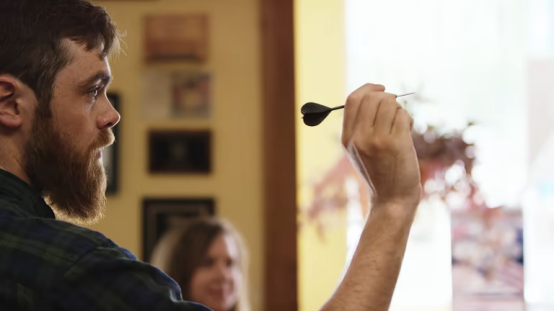
From the perspective of rehabilitation professionals, the value of dart boards lies not in “alternative therapy” but in “complementary therapy.”
It fills several gaps in traditional rehabilitation:
- Functional motor insufficiency
- Low patient participation
- Emotions and motivations are ignored
By integrating training into more natural movements and scenarios, dart boards help patients progress simultaneously on both physical and psychological levels.
When a single throw becomes the turning point in recovery.
Recovery is never a straight line.
It’s more like a series of small, repeated attempts.
For some, the dart board is just one of their training tools;
But for others, it may be the starting point for regaining a sense of control over their bodies.
Perhaps the real question worth considering is
In the rehabilitation process, have we given patients enough reasons to “be willing to participate”?
When training is no longer just a task, but a process that can be anticipated,
Recovery is often already underway.