
In many training scenarios, what truly determines the outcome is not whether
the dart hits the target or not, but rather the sound, the vibration, and how the dart lingers after it strikes the target.
Crisp or dull?
Clean or sluggish?
These seemingly “irrelevant” details often silently reshape a player’s judgment system. Especially when training enters a stable phase, the tactile feedback of the dart board begins to shift from a background factor to a psychological signal.
Confidence does not come entirely from the outcome but from a feeling of confirmation.
Rebound is not a physical result but a perceived event.
From a mechanical perspective, rebound is merely the residual reaction after energy transfer.
However, from a sports psychology perspective, rebound is an immediate feedback.
In discussions about the dart board bounce effect, researchers and coaches repeatedly emphasize that
Humans rely more on “perceptual confirmation” than on post-event statistics in repetitive movements.
After a dart hits:
- Is the sound clean?
- Do your fingers feel a consistent release?
- Is the dart stably stationary?
These elements together form a complete feedback loop.
If the loop is interrupted, even if the result is acceptable, the brain will label it as “uncertain.”
Over time, this uncertainty will turn into hesitation, and hesitation is the enemy of stability.

Sound is an underestimated trigger for confidence.
Many players are unaware that they are actually “listening” to the target surface.
In a quiet training environment, the thud of the dart board gradually becomes part of the rhythm.
Clear, short sounds are often interpreted by the brain as “successful completion.”
While vague, drawn-out sounds are more likely to trigger subconscious corrections.
Similar descriptions can be seen in some training feedback logs:
- “His voice sounded off today; he seemed to be holding back his pitches.”
- “It hit, but it didn’t sound as decisive as usual.”
This is not due to psychological fragility but rather the effect of dart sensory feedback.
Neuroscience research shows that auditory feedback can significantly affect motor confidence.
When the sound does not match the expectation, the brain automatically reduces the credibility of the motor prediction, even if the visual result is correct.

The sensation of touch reaches the brain before the impact.
In terms of rebound feel, the first thing that is truly perceived is not the sound, but the touch.
In the instant after the movement, the fingers, wrist, and forearm receive a set of weak but clear feedback signals. These signals tell the body:
- Has the force been fully released?
- Is the angle of incidence smooth?
- Was the movement “caught”?
If a localized area of the dart board experiences inconsistent rebound due to wear, structural changes, or installation issues, then this tactile confirmation will become unclear.
The result is often
- The movements began to become more conservative
- Slightly slower release speed
- The match was terminated early.
These adjustments are not deliberate but rather the body’s instinctive response to “unreliable feedback.”
When feedback is inconsistent, confidence will collapse first.
Many players, when their performance dips, prioritize checking technical details.
However, in Dart confidence factors analysis, feedback stability is often an overlooked starting point.
If the same action produces drastically different rebound sensations in different areas, the brain will quickly conclude:
“I cannot predict the outcome.”
This sense of unpredictability directly erodes confidence.
A more subtle problem is that players often blame this discomfort on themselves, rather than on the dart board.
This creates a vicious cycle:
- Abnormal rebound → Psychological anxiety
- Psychological anxiety → Tightening of movements
- Tighten the action → Hit fluctuation
- Hit fluctuations → Confidence further declines
In the post-mortem analysis, the true starting point has been obscured.
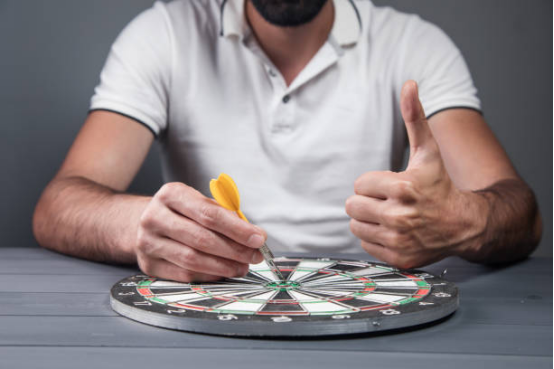
Perceived quality is becoming an implicit indicator of advanced training.
In an increasing number of advanced training discussions, the concept of “perceived quality” is being mentioned frequently.
It doesn’t refer to hit rate or individual performance, but rather a more abstract question:
Does this environment consistently provide reliable feedback?
The role of the dart board is far more than just that of the “target.”
- Is the rebound consistent?
- Is the sound stable?
- Do different zones provide similar tactile feedback?
When these conditions are met, players are more likely to enter an automated state.
When these conditions are broken, even with advanced technology, they will be forced back to “control mode.”
Some of the extended content about the consistency of the Dart board training environment takes this angle to explain why device status affects psychological performance.
The rebound problem does not always appear immediately.
Changes in the rebound feel are often gradual.
At first, it just felt “weird” occasionally;
later, a sense of resistance began to appear in specific areas;
And then, it affected the overall rhythm.
This is why many people only check their dart board status when their confidence has been significantly shaken.
In training records, abnormal rebounds typically precede performance fluctuations by several weeks.
If these signals can be identified earlier, much of the psychological breakdown can be avoided.
FAQ: Frequently Asked Questions about Dart board Rebound Feel
Q1: Does the rebound sound really affect accuracy?
It doesn’t directly affect accuracy, but it does affect confidence and shooting decisions, thus indirectly affecting consistency.
Q2: Why do some areas rebound particularly “crucially”?
This is usually related to the frequency of use, changes in material density, and structural condition.
Q3: Should beginners care about the rebound feel?
It has little impact on beginners, but getting used to inconsistent feedback too early may delay the development of skills.
Q4: How to distinguish between a psychological problem and a dart board problem?
If the condition improves significantly in different environments, it often indicates that feedback factors play a larger role.
Confidence never arises from nothing.
Many people understand confidence as “believing in oneself.”
But in repetitive exercises, confidence is more like a state of constant confirmation.
With every shot, the body asks itself a question:
“Is this move still worth trusting?”
The responsive feel of the dart board is one of the most direct and honest answers to this question.
Confidence builds naturally when feedback is clear, consistent, and predictable.
Confidence dwindles when feedback is chaotic, vague, and unpredictable.
Perhaps next time you feel like you’re not performing well, don’t rush to doubt yourself.
Listen to the sound first.
Feel the rebound.
The answer may already be written on the target.