
Table of Contents
Have you ever had this experience: excitedly unpacking a new dart board that’s touted as having “diamond-level hardness” and “can last a lifetime,” hanging it on the wall, stepping back 2.37 meters, and throwing your first dart?
Instead of the chilling, deep “thud,” the result was a crisp, abrupt “snap.” The dart seemed to have hit a cloth-covered concrete wall, either bouncing awkwardly out or barely hanging on the surface, its tail fin teetering precariously.
At that moment, you can even feel a slight stinging sensation in your wrist as it bounces back.
This is the truth ruined by marketing. Over the past decade, I’ve seen countless misled consumers blindly pursuing extreme durability, believing that buying a target plate as hard as a rock equates to value for money.
But as a veteran in the industry, I must tell you a harsh truth: for training, excessively pursuing a durable target plate is quietly dulling your sensory perception.
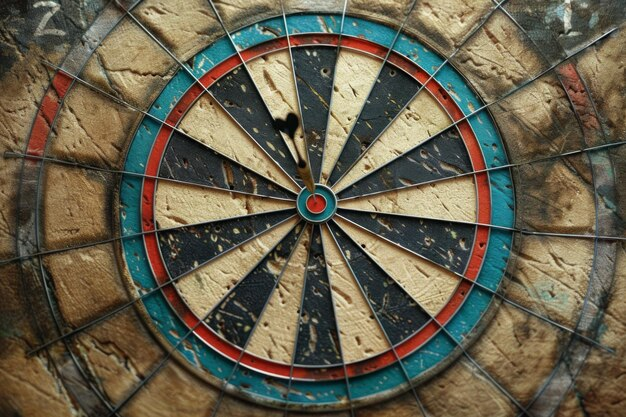
How did that “hardness myth” come about?
Let’s reveal some industry secrets first.
Why do most entry-level and even mid-range brands of dart boards go to great lengths to tout “high-density sisal”? Is it because they genuinely care about your experience?
No, it’s because “hardness” is the easiest thing to do and the easiest thing to use as a selling point.
In the Kenyan sisal supply chain, to manufacture an extremely durable target disc, factories only need to do one thing: increase the tonnage of the hydraulic press, stuff in more cheap short fibers, and then compress it forcefully. The resulting product is indeed hard; you could hit it with a hammer and it wouldn’t even leave a dent.
But what is sacrificed in this stiffness? Elasticity.
When you throw a 24g tungsten carbide dart, you need more than just it to “stab” the target. You need the fibers of the target plate to “swallow” the dart tip like living muscles, and then gently wrap around it. This subtle physical feedback is instantly transmitted back to your fingertips through the dart, telling you whether the dart “penetrated” or “floated”.
If the target is too hard, this darts feedback sensitivity will completely disappear. You won’t feel the depth of the impact, and your muscle memory won’t be able to establish a precise force feedback loop. You think you’re practicing darts, but you’re actually training your arm strength.
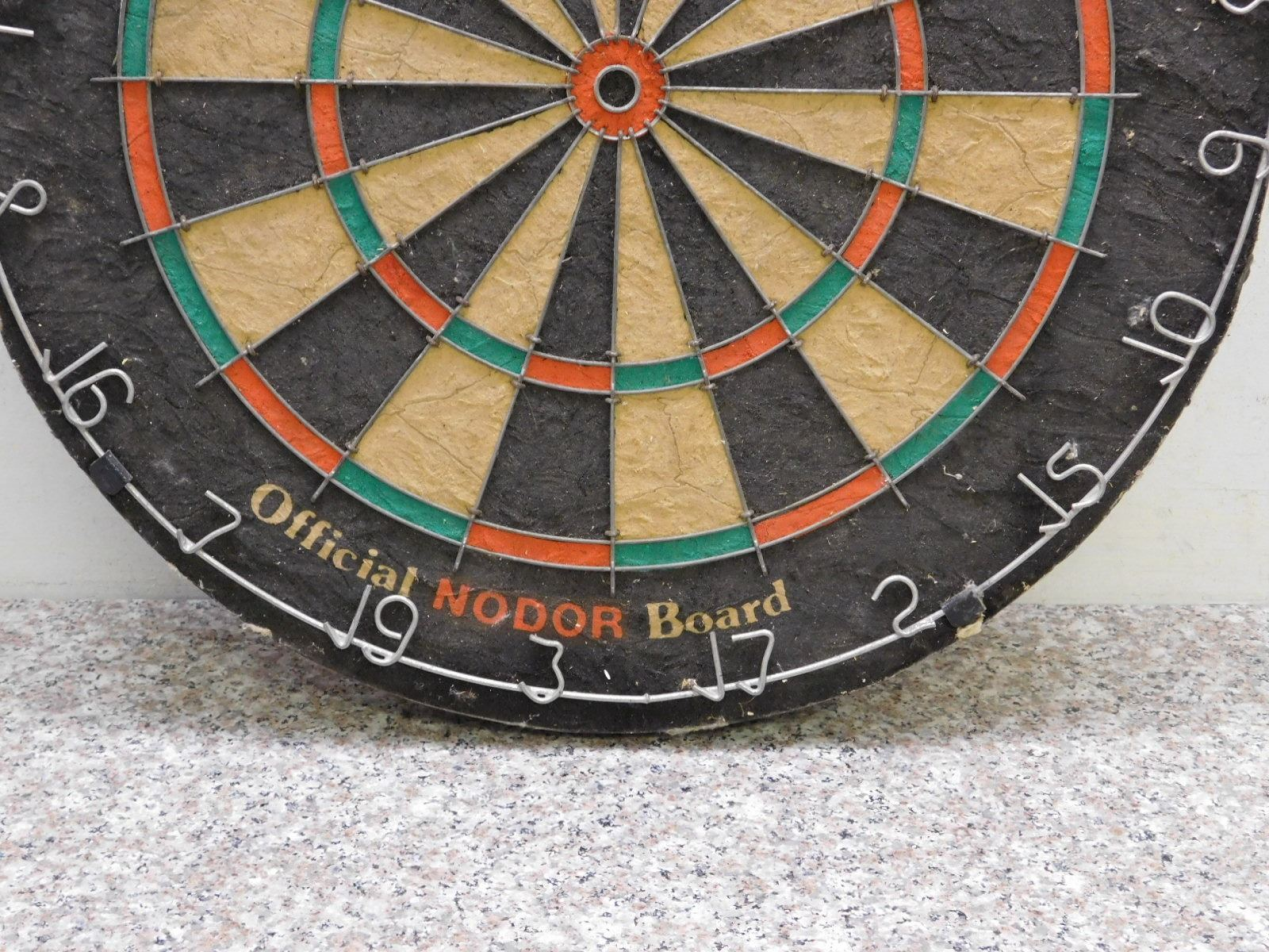
Auditory feedback: the neglected core of training
Here’s a detail that most people overlook: darts are not just a visual sport; they are also an auditory sport.
Close your eyes and recall the sound of a professional player competing on television. It’s a deep, muffled sound, like a heavy object falling into a thick sand dune. This sound indicates that the dart has been smoothly absorbed by the sisal fibers with perfect kinetic energy.
An over-hardened dart board will produce a high-frequency impact sound. This is not just unpleasant to hear; it represents the escape of energy.
This sound signal is crucial when you are training.
- A deep, resonant “thud” tells your brain that the flight posture is perfect and the force is penetrating enough.
- A crisp “snap” sound: a warning that the dart entered the target at an incorrect angle or encountered resistance.
If you’re using a product with a rigid, durable disc, you’ll hear the same noise regardless of your shot’s quality. Over time, your brain will ignore these subtle differences. It’s like a coach who only says “not bad,” offering no specific corrective advice no matter how well you play.
At this level, the relationship between dart board durability and training is inverse. To obtain the most sensitive feedback, you must accept that the dart board is a “consumable.”
Finding the “buttery” sensation: Redemption through a dual-core approach
Since being too hard won’t work, and being too soft is really expensive (it will fall apart in a week), what is the solution?
In recent years, a very clever technological compromise has emerged in the high-end market—dual core.
This isn’t marketing jargon. If you cut open a top-of-the-line professional dart board (I once actually cut an $80 board), you’ll find its internal structure is layered:
- Outer layer (main load-bearing layer): Sisal has a relatively low density and excellent softness. This provides a so-called “buttery feel,” allowing darts to penetrate effortlessly, reducing bounce, and providing excellent tactile feedback.
- Inner layer (base layer): Extremely high-density compressed sisal. This is to grip the final segment of the dart tip and provide overall structural support to prevent the target disc from deforming.
This structure perfectly balances the contradictions. The outer layer is responsible for “sensitivity,” while the inner layer is responsible for “lifespan.”
When you want to upgrade your training gear, don’t look at how many tons it boasts about, but rather whether it has this layered structure.
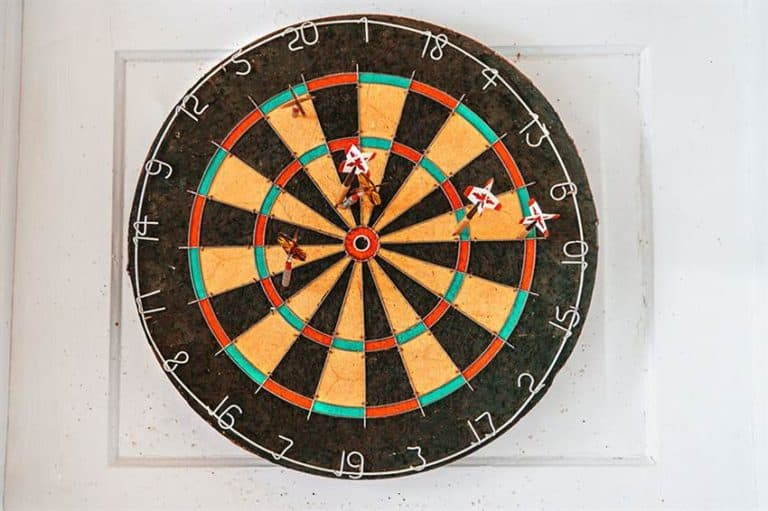
True durability comes from “maintenance,” not from being “hard.”
Finally, I want to say something for those “soft targets” who have been wrongly accused.
Many beginners complain, “Why is this high-end Dart board already getting rough after only three months of playing Hearts?”
This is usually not a problem with the target ring; it’s a problem with you. If you stare at the bullseye 500 times a day and never rotate the target ring (Rotatable Number Ring), even an iron one will get a hole in it.
The reason why real professional players’ targets are so durable is because they execute “spin strategies” with extreme self-discipline.
- Once a week: Remove the number ring and rotate the target disk one position clockwise (for example, change the current 20 partitions to 12 partitions).
- Even stress distribution: This allows the sisal fibers to be broken down and repaired evenly throughout the entire heap. High-quality sisal has an amazing “self-healing” ability; given time to rest, the fiber pores will close on their own.
Rather than pursuing a board that will never break like a rock, it’s better to learn how to maintain a “delicate” but precise board. This is part of darts etiquette and professionalism.
FAQ (Frequently Asked Questions)
Q1: Since a hard board is not good, is a softer dart board more suitable for beginners?
A: Not entirely. A soft target (usually a cheap pulp target or a low-density grass target) won’t bounce the dart, but it also won’t grip it properly. The dart will droop after being placed on the target, which can seriously mislead your judgment of the angle of attack. The darts’ feedback sensitivity we’re looking for means “clean hit and firm grip,” not a loose, cotton-like feel.
Q2: How can I tell if my target is too hard?
A: Do a simple “nail test.” Press firmly on the white area of the target plate with your thumbnail. If it’s a high-quality training target plate, you should be able to make a slight dent that disappears quickly after you release your pressure. If it feels like pressing on a hardwood floor and doesn’t budge, then the plate is probably too hard for high-precision training.
Q3: Will the so-called “staple-free” surface affect durability?
A: On the contrary, it improves durability. Old-style target boards used metal spikes to attach the dividing mesh to the sisal surface, and the sisal around the spikes was easily crushed and damaged. Modern Blade Wire technology embeds the mesh directly into the fiber gaps, reducing physical damage to the dart board and freeing up more effective scoring area. This is a win-win design for both durability and training experience.
Q4: Do those target plates that claim to “last for 20 years” really exist?
A: Theoretically, it’s possible if it’s made of polymers or low-quality, high-glue sisal. But as a professional, I advise you to stay away from such products. In the world of darts, “immortality” means “lifelessness.” A normal, frequently used professional dart board has a reasonable lifespan of 1 to 1.5 years. When its fibers can no longer hold the darts, letting it retire honorably is a sign of respect for the sport.
Conclusion
Darts is an art of “control,” and that control comes from every tiny dialogue between you and your equipment.
When you throw, the dart board should respond, not give you the cold shoulder.
Stop being brainwashed by those “indestructible” marketing slogans. Go find that board that lets you feel the breath of sisal, and listen to that deep, sexy “thud.” Even if it needs to be replaced every two years, the finesse it teaches you in that year is something you couldn’t achieve even with ten years of practice on stone targets.
After all, you’re practicing your skills, not demolition work.