
Many people, when discussing home entertainment, think of a dart board as a small toy that can be casually hung up. However, anyone who has actually played darts and tried systematic training knows that a board and a corner simply cannot provide stable performance. Throws will land off-target, vision will be scattered, and footwork will become strained due to uneven ground. So you start to wonder: Is it a lack of skill? Is it a matter of feel?
— But often the real problem is that your dart training setup wasn’t prepared at all.
.A fully functional, comfortable, and slightly ritualistic home dart practice space transforms performance from “random luck” to a “controlled rhythm.” The satisfaction derived from this control is incredibly real and addictive. This article is for players looking to create their own custom dart zone . It won’t push sales or offer product recommendations, but you’ll see common setup logic in the industry, practical experience from veteran players, and methods to make your dart throwing more consistent and immersive. If you’d like to explore further inspiration, feel free to visit our website for setup examples and extended techniques.
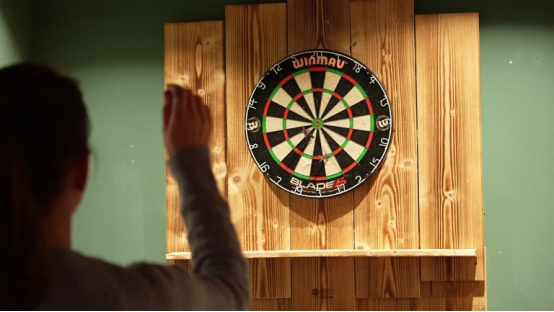
The underlying logic of spatial construction: from light and distance to line-of-sight stability
yellow,Before discussing specific setups, it’s crucial to grasp a core principle: dart throwing isn’t just about standing still and throwing; it relies on multiple factors, including visual focus, a stable stance, body balance, and ambient lighting. A common example in the industry is a player who throws accurately in a bar but not at home. It turns out the home lighting is too yellow and the angle of illumination is incorrect, causing the shadow to shift and leading to misjudgment.
Light
The lighting doesn’t necessarily need to be “professionally supplemental lighting,” but three things must be done:
- dart boardUniformity: Avoid situations where the left side of the Dart board is brighter than the right.
- ; otherwise,Gentle: Avoid glare, otherwise it will increase eye pressure when aiming.
- :Positive direction : The light should fall on a point where the texture of the dart is clearly visible, rather than hitting your eyes.
Many professional museums use a ring-shaped diffused light source to create a soft halo around the dart board. You can use this as inspiration, but you don’t have to copy it exactly; just make sure it’s “clear to see but not tiring to look at.”
Throwing distance
.Many people overlook the distance between their feet when setting up a custom dart zone . A truly professional space will have very precise control over the landing distance—not only the distance from the front foot to the dart board, but also the flatness of the ground.
If the ground is too soft, such as a thick carpet, it will cause a slight forward lean, resulting in a distorted feel. Real-world examples show that many players have seen a significant improvement in their accuracy after switching to wooden floors or a firm mat.
eye level
You might be surprised to find that even if the dart board is only 2-3 centimeters off from the professional height, you’ll experience slight neck and shoulder fatigue after prolonged practice. Over time, your feel for the dart board will start to feel strangely off. This error is cumulative and easily overlooked.
Therefore, when setting it up, make sure your line of sight is stable; don’t just “hang it up because it looks about right.”
Creating an immersive training environment: from noise and materials to rhythm
A truly enjoyable home dart practice space isn’t just a “space where you can throw darts,” but one where you can automatically get into the zone the moment you step inside.
Sound and environmental noise
dartboardsThe sound of darts hitting the target is a detail that many players care about. Some dart boards are made of materials that are noisier, which can disrupt the training rhythm with unnecessary noise; some users choose to apply sound-absorbing materials or install a wall cushioning layer to make the whole rhythm smoother.
In real user experience, most people will mention that “the less background noise, the easier it is to aim and sink the dart.”
Establishing a training rhythm
Many beginners mistakenly believe that darts training relies on brute force or feel, but true training requires a sense of rhythm. When setting up the space, you can place a visual marker in your usual spot to help your body find the rhythm for throwing.
Professional darts halls also use small visual aids on the ground, not for aesthetics, but to help build muscle memory.
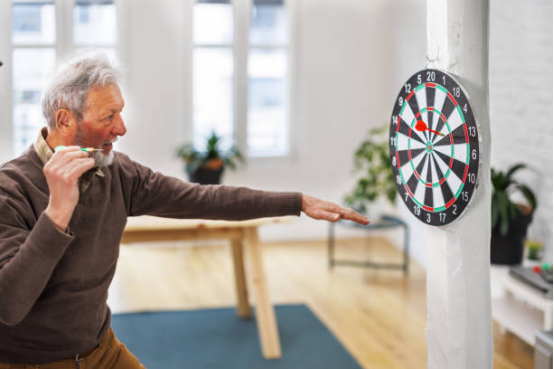
Making training more systematic: recording, feedback, and spatial readability
You’re not building a Dart training setup just to “have fun throwing,” but to systematically improve. The space should allow you to understand your own problems.
Recording area
Some players set up small blackboards or whiteboards to keep score or record training results. It might sound old-fashioned at first, but the actual effect is amazing.
Recording can help you see whether the offset is to the left or right, and it can also let you know which days you are in good form and which days you are out of form.
Environmental Tips
decoration butSetting up visual aids within a custom dart zone is a common technique in the industry. For example, placing a stable footpad on the ground lets you know where to place your feet, or setting up a small visual focal point around it helps you enter training mode.
These aren’t just for decoration, but to make the entire environment “readable,” allowing the body to quickly get into the training state.
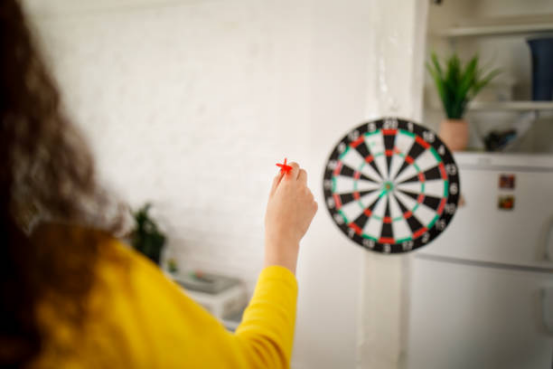
Materials, Layout, and Sense of Security: The training environment is not only a functional area but also a psychological one.
When creating a dart board space, you’ll notice an interesting phenomenon: the more secure and less anxious the environment, the easier it is to produce a stable and linear feel when throwing.
Protective layer
It’s normal for darts to occasionally miss their target. If you don’t want dents in the wall, you need to consider a buffer layer. This is standard practice in the industry and a necessary part of most players’ custom dart zones.
sense of space
A cramped corner can stiffen your throwing form. Multiple user reports indicate that training feels significantly more relaxed when there is at least 80–100 cm of empty space around the dart board.
The cleaner the space, the more consistent your performance.
Let the dart board space become your rhythmic domain.
Creating a dedicated dart board training environment isn’t about building an “entertainment zone,” but rather about establishing a repeatable, immersive, and evolving rhythmic space. From lighting to materials, from distance to the feedback system, every small adjustment will affect your stability.
If you’d like to further explore your ideas, you can check out more creative setup ideas, lighting combinations, or advanced player training environment examples in our articles. These can help you continuously upgrade your custom dart zone.
Finally, here’s a question for you:
When you stand in front of your dart board, do you hope it offers you “just some fun” or “real opportunities for improvement”?
The answer usually lies in how much effort you’re willing to put into this small area.