
A quiet room, softly falling light, the subtle pressure of your fingertips as you grip the dart—many people never imagined that an ordinary dart board could bring such a sense of deep relaxation when you’re alone. It’s not a noisy bar, nor a scene of intense competition, but in a moment completely your own, the slight yet steady repetitive movements allow your body to automatically release tension. Many users call this experience the “unexpected magic of solo relaxation games ,” and the psychological community often mentions the “sedative effect of repetitive behavior.”
Interestingly, this near-meditative state doesn’t require candles, music, or cushions; a dart board can open a quiet, introspective passage. Rather than a tool for entertainment, it’s more accurately described as a visible, tangible, and rhythmic stress relief routine .
The following content will break down the mechanisms of this deep healing and explain why more and more people are adopting it as a daily practice of dart mindfulness .
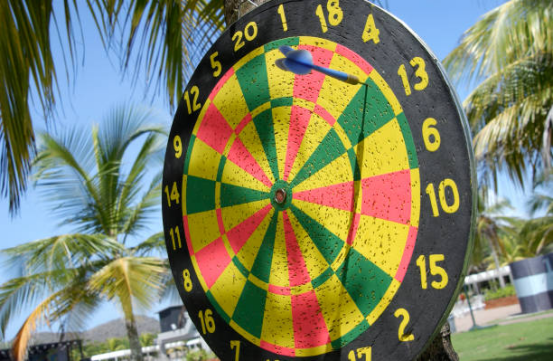
How is the calming effect of repetitive movements amplified by the Dart board?
If you observe carefully, you’ll find that the motion of throwing a dart is actually extremely regular: stand still, raise your hand, aim, exert force, and land. Each step is as steady as a breathing rhythm. When you repeat the same path of motion, your brain gradually enters an “automatic running” mode—this is a common “calming loop” in psychology.
The very structure of a Dart board is well-suited to triggering this kind of loop:
- The circular bullseye allows the eye to focus naturally, without being disturbed by external visual information.
- The partitioned structure creates tiny goals, providing the brain with “micro-tasks” and reducing anxiety.
- The “thud” of the dart becomes a rhythmic marker, providing micro-feedback like percussion.
Many users have shared similar experiences in the community:
“After five minutes of throwing, my mind suddenly calmed down, and all that remained in my mind was the action itself.”
These feedbacks are not psychological suggestions, but genuine physical and mental reactions. Studies show that repetitive physical actions can reduce brain activity in anxiety areas, resulting in a significant calming effect. Dart throwing, on the other hand, is a precise movement that doesn’t require extreme concentration, falling perfectly within the golden range of “moderate challenge.”
The core of Dart’s mindfulness lies not in accuracy, but in the “path of attention”.
Meditation is often misunderstood as “blanking your mind.” But professional mindfulness emphasizes “bringing your attention back to a specific object.” For some, that object is their breath; but for others, a dart board is easier.
Why? Because Dart’s trajectory is very specific, visible, and controllable.
Where you aim, how the movement will go, and where the dart will land—these are all visible feedbacks.
This gives focus and weight, preventing it from drifting like in traditional meditation.
More importantly,
focusing on something a few meters away, rather than inside the body, can reduce the pressure of self-consciousness and make it easier to relax.
This is why more and more people are incorporating dart throwing into their stress relief routines .
Even just five minutes can keep your attention on a single track, like pressing the “return to place” button on your thoughts.
If you’ve been trying to practice mindfulness for a long time but can’t seem to sit still, then Dart’s light-motion meditation method is actually more natural.
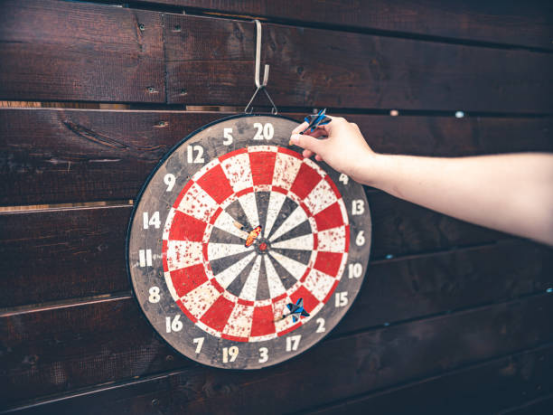
Why do solo gamers prefer Dart board as a solo relaxation game?
The more time people spend alone, the more they understand that truly “emptying one’s mind” doesn’t mean doing nothing, but rather finding something that can calm the mind.
Dart board perfectly meets several needs:
1. No ritual preparation is required; you can get into the zone anytime.
No need to change clothes, no need to set up the environment, no need to turn on the equipment—just walk over, pick up the darts, and you’re good to go.
The worst thing about being alone is complicated processes, but dart boards have virtually no barrier to entry.
2. Visual feedback is more direct than yoga or breathing exercises.
The immediate feedback of seeing where the dart will land provides a sense of control.
In a state of anxiety, what people crave most is this feeling of “I can influence the outcome.”
3. Light exercise can help the body release stress hormones.
Darts is a light sport that stimulates the body to release trace amounts of endorphins, which can help calm the mind.
It also doesn’t create the psychological burden that can be felt during athletic training.
4. Has a “focus window” and can briefly enter a state of flow.
Many players said they unknowingly spent twenty minutes playing, a state of micro-flow that is very rare.
Especially for introverted or highly sensitive individuals, the rhythm of dart boards perfectly matches the energy of solitude.
5. Being alone does not mean being lonely; rather, it means establishing a channel for self-dialogue.
Throwing itself is a vehicle for reflection, allowing you to organize your thoughts in an effortless sport.
It is these multi-layered experiences that make the dart board an underrated healing tool.
How the stressful structure of modern life makes Dart-like movement therapy necessary?
High-density work, information overload, and social fatigue have become the basic stress structures of modern people. In this fast-paced lifestyle, a method that allows for a quick switch to “self-recovery mode” is all the more necessary.
However, traditional relaxation methods all have an “entry threshold”:
- Meditation is too quiet
- Too tired from exercise
- The game is so exciting!
- Music relies too much on emotions
On the contrary, Dart’s combination of “light movements + low stimulation + steady rhythm” is most likely to help the body automatically reduce noise.
You may not have noticed, but when you face a dart board, your body automatically does the following:
- Shoulders will relax
- Breathing will become steady
- Arms enter a uniform swing
- Staring intently at a single point
are typical signs that the nervous system is entering “calming mode”.
Some psychology experts even list Dart as a “dynamic mindfulness tool” that can replace meditation.
Not because it is “curative,” but because it binds attention to a small cycle of movement, allowing the brain to escape chaos.
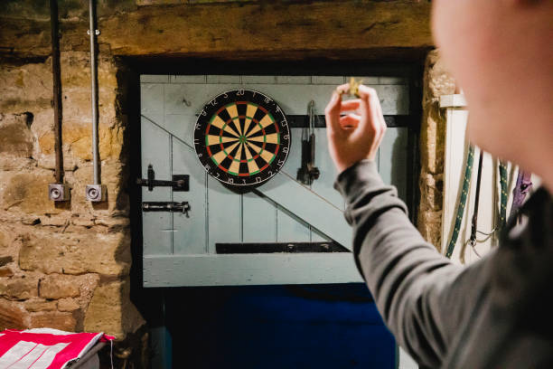
Healing Cases and Use Cases of Dart Board among Real Users
To make the content more relatable to real-life experiences, we referenced the total number of user comments in the community and summarized several typical healing scenarios:
Scene 1: Decompression ritual after get off work
Many users have said:
“As soon as I walk into my house, put down my bag, and throw three rounds of darts, I feel like I’m rebooting.”
This kind of decompression doesn’t require skill; it’s a psychological sense of separation.
Scene 2: Organizing thoughts late at night
When the night is quiet, the act of throwing allows thoughts to automatically align, similar to journaling, but much easier.
Scenario 3: Emotional Regulation for Individuals with Mild Anxiety
Repetitive movements can help the body lower cortisol levels, a fact that has been repeatedly proven in anxiety management.
For some, the sound of darts can even be a grounding signal.
Scenario 4: Transition methods for entering a “meditation state” in advance
Some people use Dart as a warm-up, which makes it easier to enter into deep meditation.
This is a natural transition from “dynamic” to “static”.
What these experiences have in common is that dart board doesn’t force you to “relax,” but rather allows you to naturally slide into relaxation through movement.
If you want to establish your own stress relief routine, you can start with the smallest habits.
No need to set complicated goals or keep track of scores. You can start in the following very easy way:
- Throw 10 darts and feel the body’s aiming motion.
- Focus your attention on the moment the dart leaves your hand.
- Don’t treat hit rate as a task
- Perform under your preferred lighting.
- Using throwing as an end-of-day signal
Perhaps healing is not about finding some kind of answer, but about finding a stable rhythm.
Many people use reading to calm their minds, some use walking, and some use deep breathing. The reason why dart boards are becoming increasingly popular is that they allow the body and attention to align naturally, rather than relying on willpower to “enter a state of relaxation.”
You don’t need to be very skilled or have any special techniques.
All you need is a starting point for repetitive actions.
Perhaps in a seemingly meaningless moment of throwing, you will suddenly feel your mind calm down.
So, you might try asking yourself:
In your alone time, do you also want to have a private rhythm that is small enough to allow your mind to quiet down?
If you’d like, you can start with a simple dart board .
That recurring rhythm might just be the gateway to the next deep healing.