
In a musical space where light and shadow intertwine, the deep notes of the piano and the light melodies of the guitar intertwine, while a dart board in the corner quietly becomes the focal point of the space’s interaction. Have you ever considered that a dart board is more than just a throwing target? Through the choice of materials and structure, it can create “acoustic resonance” with the environment, enhancing the overall atmosphere of the space. This article will delve into the differences in stability, weight, and durability of various dartboard materials and analyze how to achieve a subtle interaction with the musical space through design.
The Influence of Different Materials on the Stability of a Dart board
Traditional dart boards are typically made of felt, wood, or synthetic materials, each exhibiting significantly different levels of stability. Felt dart boards are known for their dense, natural fiber structure, and their elasticity effectively absorbs impacts from darts, reducing board shift. In contrast, wooden dartboards are more prone to slight vibrations upon impact, but their weight provides more stable visual and tactile feedback.
In a music space, stability not only affects the gaming experience but also the acoustic environment. High-density wool dartboards produce gentle sound waves when struck, without generating harsh rebound noises, while lightweight composite boards may produce subtle reverberations under harsh notes. If you’re setting up dart boards in a jazz or light music environment, the material selection should balance gaming feel with the acoustics of the space, ensuring that the dartboards become a natural interactive element rather than a source of noise.
The trade-off between material weight and portability
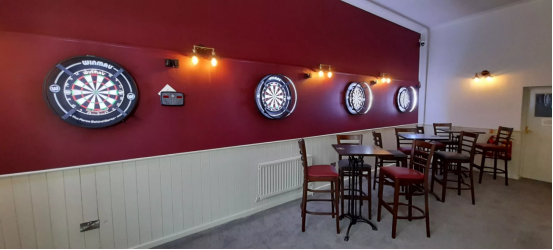
The weight of a dart board directly affects its ease of transport and hanging safety. Wool and wooden dartboards are typically heavy, requiring sturdy supports for fixed installations, while composite materials and PVC boards offer the advantage of lightweight construction, making them easier to adjust or integrate with the space’s furniture layout. In music spaces, lightweight dartboards allow for flexible placement and can even serve as temporary partitions or performance devices when needed, enriching the space’s interactivity.
However, overly lightweight boards are prone to wobbling during throwing, affecting accuracy. Therefore, designers often use methods such as localized thickening or internal frame support to ensure that the dartboard remains stable while maintaining its lightweight design. This way, the precision of the game is not sacrificed, and it can adapt to the flexible layout requirements of music spaces.
Durability and long-term performance
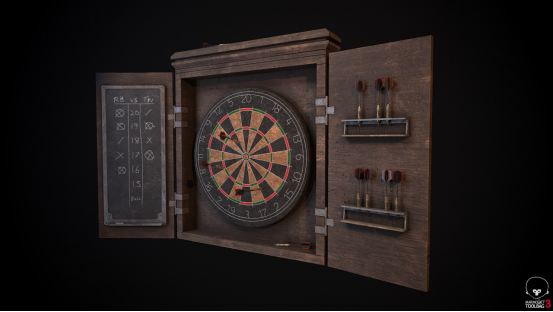
Frequent throwing poses a long-term durability challenge to dart board materials. Wool dart boards are known for their self-healing properties; the holes close naturally after the dart is removed, extending their lifespan. While wooden boards are heavy, their surfaces are prone to wear and tear, requiring regular maintenance or rotation during use. Composite material dartboards offer higher wear resistance, but if their density is too low, they may experience decreased elasticity or deformation after prolonged use.
In music spaces, durability isn’t just about the throwing experience; it also impacts visual neatness and the overall feel of the space. A durable dartboard maintains a clean and uncluttered appearance, aligning with the space’s design and acoustics. This long-term durability is especially crucial for spaces hosting live performances or social events.
Acoustic Resonance and Material Selection Strategies
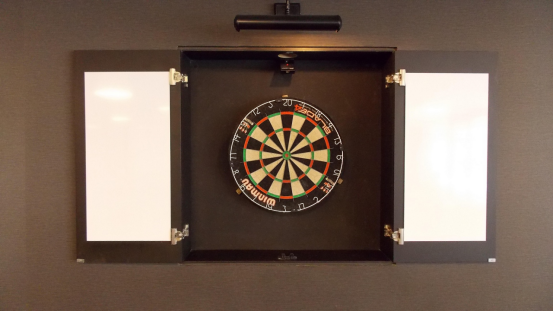
Beyond stability, weight, and durability, the most unique role of a dart board in a music space is acoustic resonance. Different materials produce significantly different sound characteristics when darts strike. A wool dartboard produces a soft sound, suitable for light music or jazz atmospheres; a wooden dart board produces a crisp and powerful sound, fitting well with rock or electronic music environments; and a composite board, due to its uniform material, can produce a neutral response, blending with diverse musical styles.
In engineering design, the attenuation and propagation of striking sound waves can be precisely controlled by adjusting the thickness of the dartboard, its internal support structure, and edge materials. In this way, the dartboard is no longer just a gaming tool but an integral part of the music space, interacting with subtle sounds and rhythms to add immersion to the space.
Integrated design and user experience
Integrating dartboards into music spaces requires comprehensive consideration of materials, weight, stability, and acoustic properties. Designers will select the most suitable board material based on the space size, music style, and activity type and combine this with suspension methods, support structures, and throwing angles to achieve the best experience. Users can not only enjoy the fun of precise throwing but also experience both visual and auditory satisfaction.
User feedback indicates that carefully designed and material-optimized dartboards are more likely to become the focal point of social interaction in music spaces. The lightweight yet sturdy boards allow participants to focus more on the game itself, while the soft impact sounds resonate harmoniously with the music rhythm, enhancing the overall sense of space.
Conclusion and In-depth Exploration
Dartboard design is not just about precision and durability; it’s also a spatial and sensory engineering process. In a music space, through optimized materials and structure, dartboards achieve a balance of stability, weight, and acoustic properties, allowing the dart game to seamlessly integrate into the environment. If you’d like to learn more about dart board material selection and acoustic design strategies, come and learn more about us.
In your music space, would you like to make the dartboard a resonant experience of hearing and touch, rather than just a target to be thrown?