
In today’s fast-paced digital world, many children face challenges in terms of focus and patience. Maintaining long-term concentration is becoming increasingly difficult due to the rapid flow of information. At the same time, parents and educators are increasingly focused on how to help children improve these key cognitive abilities. In fact, a simple and fun activity—dart throwing—can not only entertain children but also effectively cultivate their focus, coordination, and sense of purpose. With proper training, the Dart Board can be an ideal tool for children to learn focus, patience, and hand-eye coordination.
Why can Dart Board help develop focus?
Darts throwing is a highly focused activity that requires participants to concentrate fully on aiming at a target and throwing the dart accurately. This skill relies not only on precise hand control but also on a high degree of focus and patience. For children, cultivating these qualities can help them better cope with challenges and maintain focus in daily life.
Concentration Training: Compared to other games that require mental effort, Dart Board offers a completely different concentration experience. Children need to focus their attention entirely on the target, adjusting their body, aiming, and releasing the dart before each throw. The accuracy of each throw is directly affected by the child’s concentration. Through repeated practice, children can gradually improve their concentration and learn how to maintain a high level of focus from start to finish without being distracted by their surroundings.
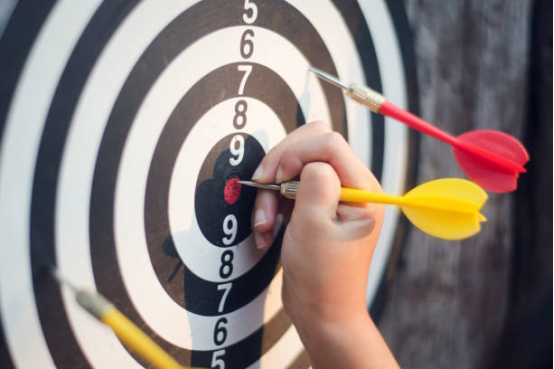
Developing patience: Every throw is an accumulation of patience.
Patience is key to success, especially when children face failure or difficulties. Dart Board is a platform that can help children develop patience. Children won’t hit the target every time they throw darts, and these experiences of failure are themselves valuable learning opportunities.
Failure is not the end: every throw that misses the target provides children with an opportunity to improve and adjust. By analyzing their mistakes, children learn to reflect and adjust, rather than becoming discouraged. Developing focus involves patiently waiting, trying and failing, and continuously improving, and dart throwing is an excellent practice ground. Children will gradually understand that only through patient accumulation and continuous effort can they ultimately achieve their goals.
For example, when children throw darts into misplaced areas, they can learn about throwing techniques and adjustments, and this lesson learned from failure will motivate them to keep trying in the future instead of giving up.
Improve coordination: Enhance hand-eye coordination
Hand-eye coordination is another important skill that can be improved with Dart Boards. Dart throwing requires children to focus their eyes precisely on the target while controlling their hand movements to ensure an accurate throw. This not only improves their motor skills but also helps children understand how their body and brain work together.
During darts training, children continuously strengthen the integration of vision, cognition, and physical movement. Through this coordinated training, children’s reaction speed and motor control abilities are improved. For example, when throwing a dart, children need to track the dart’s trajectory with their eyes and quickly adjust the throwing angle according to the target’s location. Over time, children’s hand-eye coordination gradually improves through this activity.
Developing a sense of purpose: Focusing on goals and strategies
For children, developing a sense of purpose is key to developing focus and self-control. The Dart Board provides a clear and quantifiable goal: hitting the bullseye or a specific score zone. Before each throw, children need to set a clear goal and adopt appropriate strategies to achieve it.
This clear sense of purpose helps children learn to break down complex tasks and focus on completing small goals, leading to greater achievements. For example, when throwing darts, children might focus on hitting a specific area or score and adjust their strategy based on each feedback. This not only develops their decision-making skills but also helps them understand how to set achievable goals in competition and strive to achieve them.
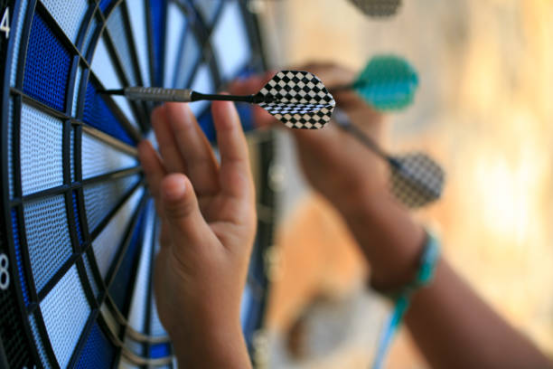
Dart Board training methods suitable for children
To make the Dart Board an effective tool, we can design training methods suitable for children that both enhance their interest and help them improve the aforementioned abilities. Here are some fun Dart Board training methods:
- Target Shooting Challenge: Set up target areas and encourage children to throw darts at them. Each successful hit earns a reward or points. This not only gives children a sense of accomplishment but also helps them develop focus and a sense of purpose through practice.
- Rhythm training: Establish a consistent throwing rhythm, such as pausing briefly between each throw to remind children to stay calm, regulate their breathing, and maintain focus. By repeating this rhythm multiple times, children will learn how to maintain a stable mental state during challenges.
- Challenge: Engage in friendly competition with friends or family to see who can accurately hit more areas. Competition adds fun and fosters a competitive spirit in children. In a relaxed and enjoyable atmosphere, children are more likely to improve their patience and concentration.
- Score Game: Set a score goal for your child and encourage them to reach that score with the fewest throws possible. This game not only improves their accuracy but also enhances their strategic thinking skills.
The impact of Dart Board on children’s cognitive development
Long-term Dart Board training can help children achieve cognitive improvements in multiple areas. Through continuous practice and repeated throwing, children learn how to concentrate, control their emotions, and accept failure, while also improving their decision-making abilities in complex tasks. Research shows that challenging play with toys, especially those activities that require hand-eye coordination, can promote the development of various cognitive functions in the brain.
Furthermore, as children progress on the Dart Board, they begin to develop their own strategies and methods, and this self-directed learning process greatly enhances their confidence and problem-solving abilities.
Make games a tool for education
By introducing Dart Boards as an educational tool, parents and educators can not only let children enjoy the game but also subtly improve their focus, patience, coordination, and sense of purpose. Through fun play, children learn how to concentrate, how to cope with failure, and how to set goals and self-regulate through continuous attempts.
If you’d like to learn more about how Dart Board can help children improve their attention and coordination, visit our website for more game tips and training methods to help children grow through play and cultivate their focus and patience.