501 Game Rules Explained: The Most Popular Dart boardCompetitive Gameplay

Darts, a popular pastime, is more than just a pastime played in the pub. It also has a strict set of competitive rules, especially in classic games like 501. 501 is one of the most common competitive dart board games, testing players’ accuracy, strategy, and mental fortitude. In this article, we’ll break down the rules and strategies of 501 and explore how to improve your darts skills with the right dart board and techniques.
What is 501 Games?
Game Introduction
501 is a darts game commonly played in professional tournaments. The goal is for each player to start with a score of 501 and, through dart throws, gradually reduce their score to zero. Unlike other darts games, 501 requires players to precisely hit the “bullseye” (center point) or another designated ending point.
Game Rules Overview
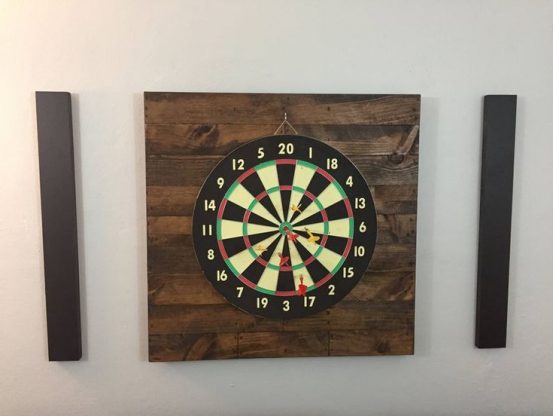
Each player’s goal starts at 501 points, and with each throw, points are deducted based on the zone the dart hits. Dart scores are determined by hitting different areas on the dart board: Single, Double, Triple, and the center of the “bullseye.”
In the 501 game, at the end of each round, the player needs to complete the game by hitting a double zone or bullseye; that is, the game must be ended with a precise dart hit.
501 Detailed explanation of the game rules
The basic structure of the game
501 is played by two players or teams. Each player or team starts the game with a score of 501. They then take turns throwing darts, with points deducted based on where the darts hit. The goal of each round is to reduce their score from 501 to 0, and to do so, players must throw darts according to specific rules, particularly the “hit-and-run” requirement.
Throwing rules:
- Each player throws 3 darts per turn.
- The location of the dart hit is scored based on the area on the dart board. For example, the outer circle is worth 1 point, the inner circle is worth 20 points, and the triple circle is worth 60 points.
- Darts point deductions are cumulative until a player’s score reaches zero.
Ending rules:
In the 501 game, players must accurately roll a “double zone” or “bullseye” to end the game. For example, players need to roll a “double zone of 20” to reduce the score to zero. If the score does not reduce to zero accurately, the player must adjust the strategy for the next round.
The role of single, double, and triple zones
There are many different areas on the dart board that affect how high or low your score is. The most common areas are
- Single: The score of the area where the dart hits is the corresponding numerical value.
- Double: When a dart hits this area, the score is double the number. For example, a dart hitting area 20 in the double area would score 40 points.
- Triple: When a dart hits this area, the score is triple the number. For example, a dart hitting area 20 in a triple would score 60 points.
- Bullseye: The central circular area of the dart board, with the center portion being 50 points and the outer circle being 25 points.
Precise throw at the end
501 is that it ends with the player having to hit a precise “double zone” or “bullseye.” This means that each of the player’s throws must be planned precisely to ensure that the final shot ends the game with precision.
For example, if the player’s score is 50 points, the ideal move would be to hit a 25-point bullseye, which would end the game immediately.
How to improve your 501 game skills?
Familiarize yourself with the various areas of the dart board.
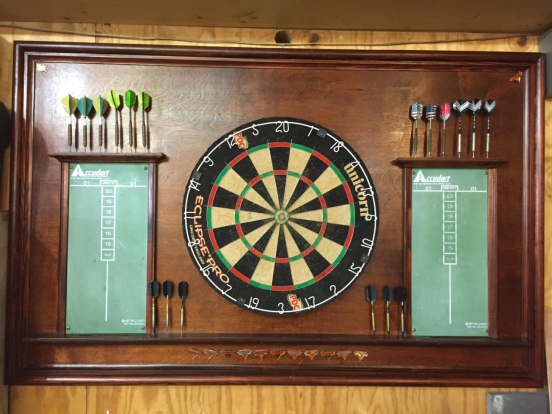
Understanding the scoring of each area on the dart board and the corresponding throwing techniques is key to improving your 501 skills. Familiarity with how to quickly locate high-scoring areas (such as the triple and double areas) will help you quickly accumulate points in the game.
For beginners, you can start by focusing on the double and triple areas. Although these areas have higher scores, they require a certain level of throwing skill and accuracy. For experienced players, the ability to accurately throw bullseye or double areas is crucial.
Optimize throwing form and technique
In the 501 game, a stable throwing posture is key to improving accuracy. We recommend practicing steady hand movements and keeping your elbows and wrists relaxed. This will reduce instability during throwing and ensure each throw is as close to the target as possible.
- Stable stance: When standing, your feet should be at a certain distance from the dart board to maintain body balance.
- Aiming Tips: Before each throw, make sure your sights are focused on the area you want to hit and stay focused.
Predict and manage scores
Managing your score is a core part of 501. You need to calculate how to reduce your score to as close to 0 as possible during each round and ensure your final blow ends the game with precision. For example, if you have 40 points left, you should aim for a “double zone 20.”
Cultivation of psychological quality
501 is not only a test of skill but also a test of mental endurance. The intense atmosphere of the game requires players to remain calm and avoid nervous mistakes. Practice throwing in high-pressure situations and learn to adjust your mindset to avoid excessive anxiety.
in conclusion,
501 is a challenging and fun darts game. By mastering the rules of each area of the dart board and throwing techniques, you can significantly improve your game. From practicing accurate double and triple shots to learning how to manage your score, all of these will help you get an upper hand in the game.
Whether you are a darts novice or an experienced competitive player, 501 can bring you great challenges and fun. Remember, accurate throwing skills, a solid mentality, and a good grasp of the dart board are the keys to your success.