
You just bought a brand-new dart board and can’t wait to enjoy some fun with family and friends. But after a night of playing, either the darts keep falling or the walls are riddled with dents. Even worse, everyone loses interest, and the dart board becomes a decorative piece in the corner. Sound familiar?
In reality, most issues aren’t due to poor-quality dart boards, but rather flawed installation. Especially in a home environment, many people adopt a “good enough” mentality, overlooking key details that compromise safety and user experience. Today, we’ll break down the five most common mistakes in home dart board installation to see if you’ve fallen prey to them.
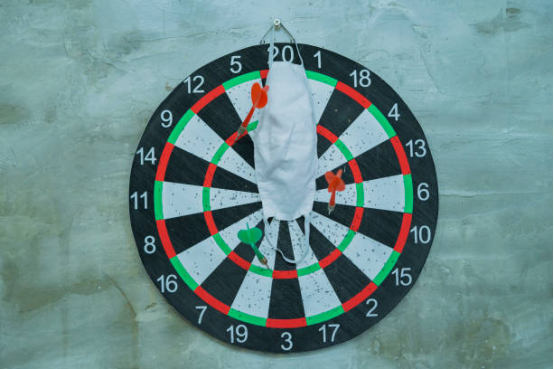
Mistake 1: Random installation leads to distorted experience
Part of the appeal of darts is that it can be both fun and competitive. But if the dart board is mounted at the wrong height, the entire throwing experience can be distorted.
The international standards are
- Bullseye is 1.73 meters (about 5 feet 8 inches) from the ground
- The throwing line (Oche) is 2.37 meters (about 7 feet 9.25 inches) from the dart board
Many home players hang the board too high or too low for convenience. As a result, the dart angle is unbalanced, which not only affects the hit rate but also easily makes beginners lose interest.
Solution: Even if it is just for home entertainment, it is recommended to install it strictly according to the standard height so that you can experience a throwing feel close to that of a professional. You will find that the standard height makes aiming and shooting more natural.
Mistake 2: Ignoring wall protection, leaving the area around the dart board in ruins
If your walls are riddled with tiny holes from darts, don’t doubt it; this is a common installation oversight. Especially for beginners, darts often miss their target. Over time, this can leave the walls looking tattered and damaged, affecting both the aesthetics and the stability of the dart board.
Common mistake: Nailing the dart board directly to the wall without any protection.
A better approach:
- Install a protective plate (surround) around the dart board. There are special EVA foam or wood materials available on the market.
- You can also choose a dart board cabinet, which can protect the wall and store darts.
- If you’re on a tight budget, at least lay down an old rug or corkboard as a buffer.
A small investment can bring longer-term cleanliness and safety, which is definitely worth it.
Mistake 3: The dart board becomes loose after a few uses.
Have you ever been in this situation? In the middle of playing, the dart board starts to shake or even falls. Besides being a bummer, it can also cause injuries.
The reason for this is often that the fixing method is too casual: using a nail, hook, or even glue to hang the dart board. Such an installation method simply cannot withstand the impact of long-term throwing.
Correct way:
- Use the metal brackets and screws provided with the board to ensure the dart board fits tightly against the wall;
- Check the screws regularly to see if they are loose and tighten them again if necessary.
- If the dart board is rotatable (common with sisal materials), don’t forget to rotate it occasionally to ensure more even force distribution and extend its life.
When installing a dart board, stability is the first priority; otherwise, even the best board will not last long.
Mistake 4: Ignoring light and leaving the throwing area heavily shadowed
Darts is a game that requires both eyesight and touch. If the dart board is poorly lit, it can be difficult to see the zones and bullseye clearly. Conversely, excessively bright direct lighting can also cause visual fatigue.
Frequently Asked Questions:
- In a home environment, dart boards are often installed in living room corners or basements where there is insufficient light;
- Some people use overhead lighting directly, which results in shadows and makes it difficult to see the partitions.
Optimization plan:
- Install soft LED light strips above the dart board to avoid shadows.
- Keep the front of the dart board evenly lit and avoid interference from colored lights.
- If your budget allows, opt for a dart board cabinet with built-in lighting.
Optimizing the lighting can often instantly enhance the playability and professionalism of the dartboard.
Mistake 5: Ignoring the safe zone and bringing potential risks to your family
When setting up a dart board at home, many people focus on having fun without considering the safety of those around them. The result is that darts fly off the target and almost hit passing family members or pets.
Common oversights: The dart board faces the aisle or dining table, or there is a window behind the throwing area.
Safety Rules:
- Keep at least 3 meters of throwing space in front of the dart board, and do not allow people to move around.
- It is best to lay a carpet behind the throwing line to prevent darts from falling and damaging the floor.
- A “small restricted area” is set up in the dart board area to remind families and children not to approach it at will.
Darts may be small, but they can still be dangerous if they miss the target. Planning a safe zone ahead of time is crucial for playing with confidence.
Install Dart Board, details determine the experience
Many people think that installing a dart board is as simple as hanging it on the wall. However, the truth is, every detail, including height, fixation, lighting, and safety, directly affects the experience.
Avoid the above 5 common mistakes, and your dart board will not only last longer, but also make home entertainment safer and more professional.
The next time your friends come to visit, you can confidently say, “Our dart board is not installed casually; it is installed according to professional standards.” At that moment, your dart board is not just an entertainment tool but the focus of family gatherings.